2020 - present
Dialpad
First designer on company's support product, built several 0 ➝ 1 products, and established the quality bar for what we ship today.
I joined Dialpad because I believe customer support teams deserve better tools. These teams do unglamorous work, are always asked to do more with less, and are usually stuck with outdated software. I wanted to help build products that make their jobs easier and their work more valued.
At Dialpad, I started as the first designer on the company’s support product and quickly grew into a leadership IC role. I’ve led several 0→1 initiatives, guided product integrations after three acquisitions, and now manage a team of eight designers. Together, we’re reimagining customer support with AI workflows that meaningfully improve the lives of agents and supervisors.
Some highlights: helping grow the support product from $50M to $300M ARR, shaping a design team that scaled alongside that growth, and delivering measurable results in the product. For example, our chatbot now deflects 62% of incoming requests, beating the industry’s then-leading benchmark of 59%.
Dialpad acquired two companies to take a voice-only product into web chat, email, and social, and become a real customer service platform. It was as much an acqui-hire as a product merge. I helped fold those teams and features into Dialpad’s UI so the company’s first omnichannel product felt like one place to work, not three bolted together. It’s now used by thousands of customers every day.
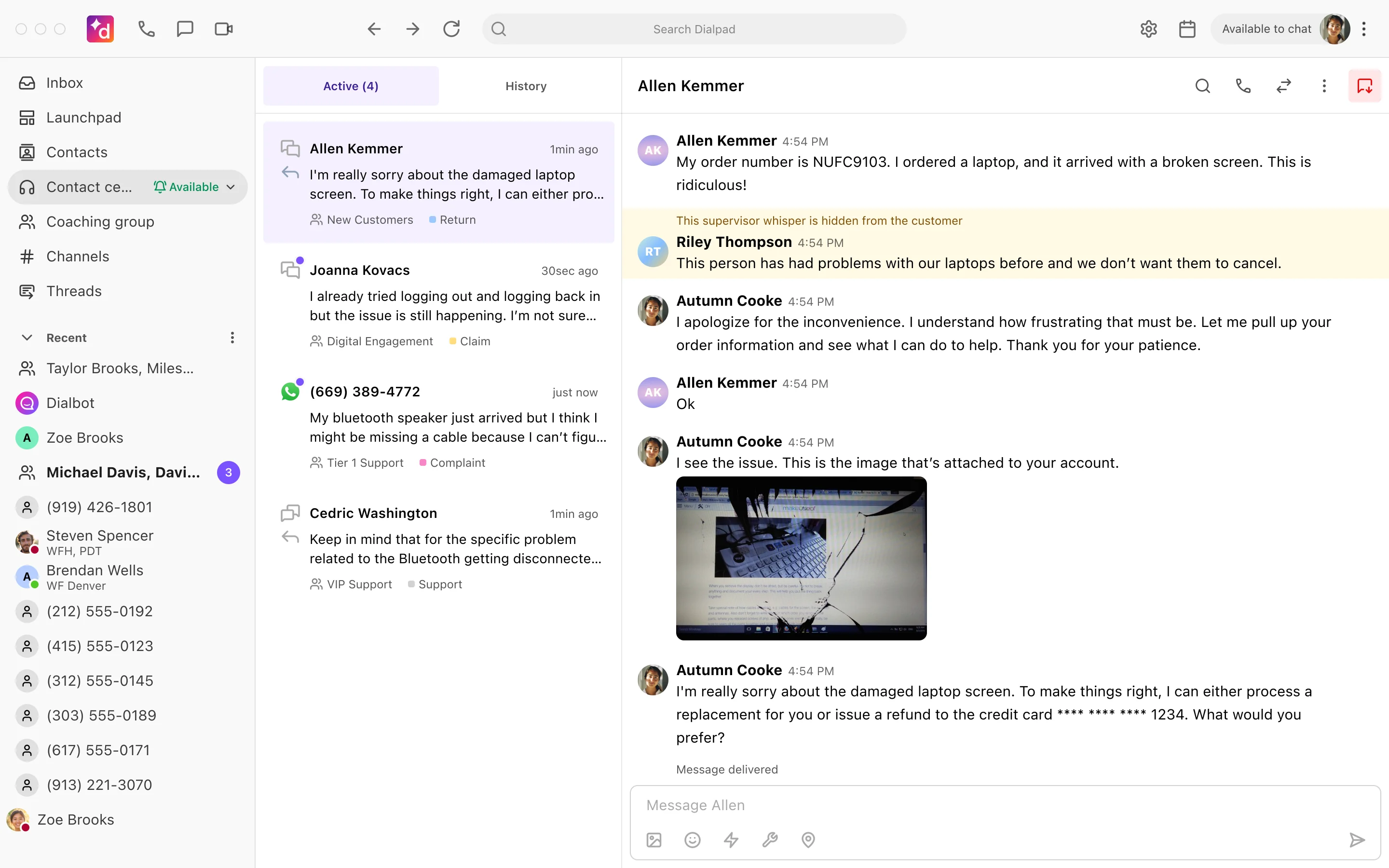
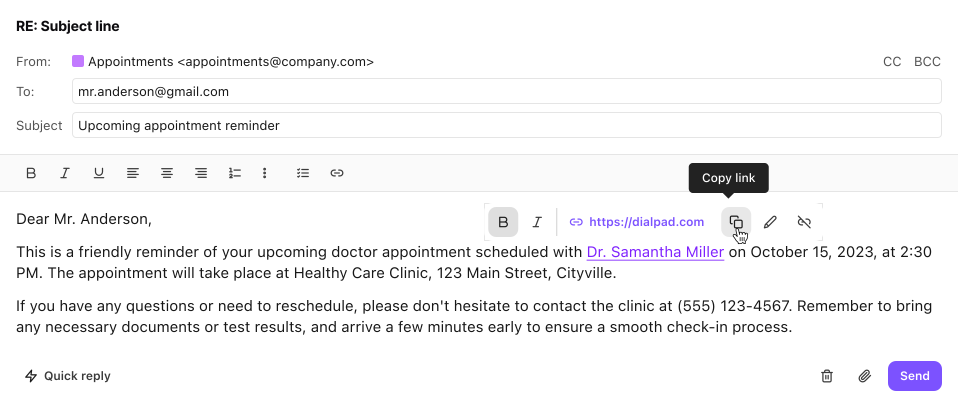
We started from a UI built for phone calls and had to invent the surfaces support work actually needs: inboxes, chat, and email inside the same shell. I built a lightweight email client into Dialpad with rich text, threading, and quick replies. Agents live on the clock, so the small shortcuts that shave a few seconds off a reply matter more than they sound.
Monitoring a contact center is a big job. Even a small one can log hundreds of calls a day. Scorecards is how supervisors evaluate that volume without grading everything by hand.
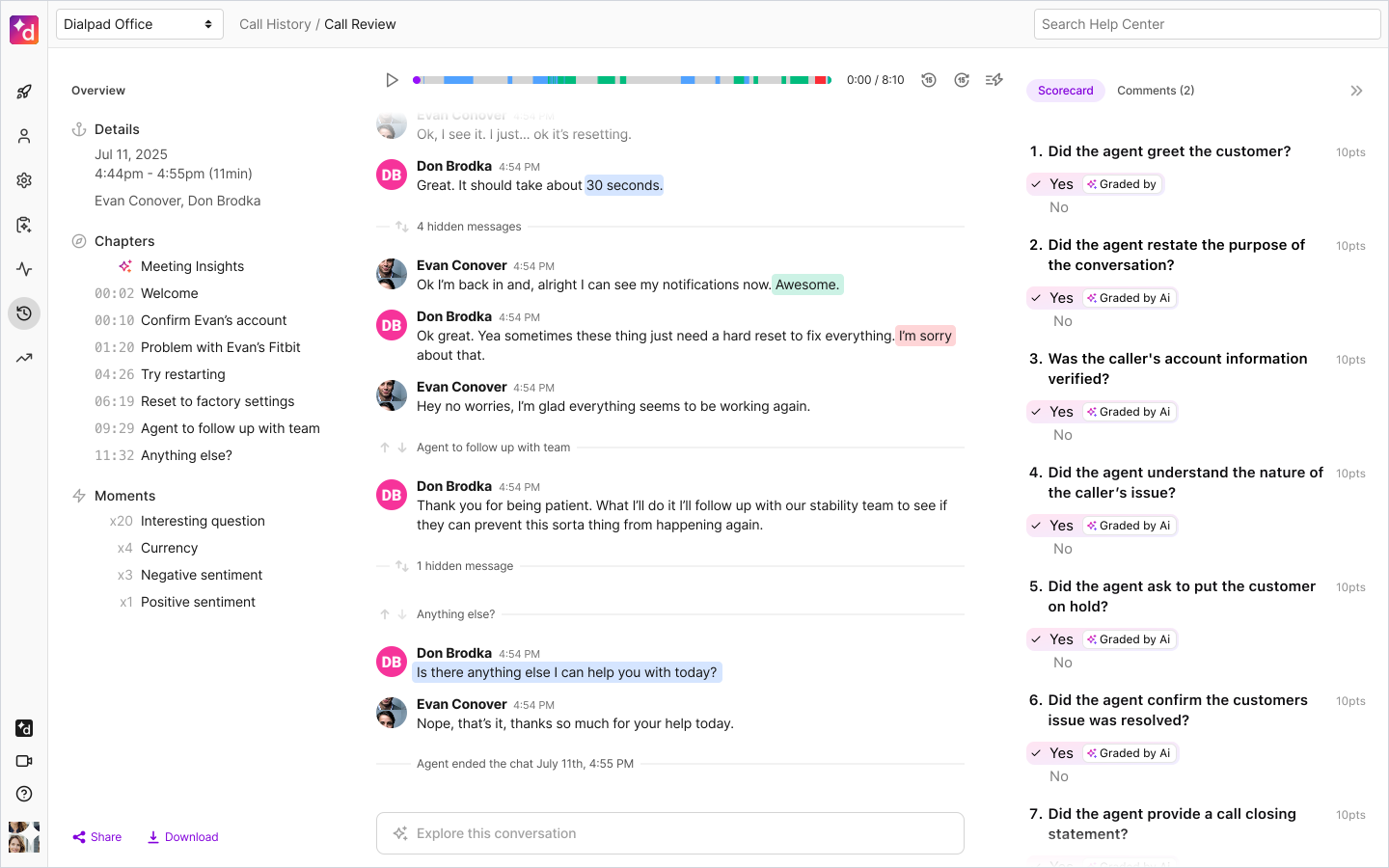
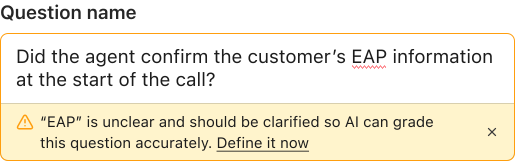
I grew Scorecards from a manual QA tool into an AI grading platform. Before automation, only about 2% to 3% of conversations got scored, which is nowhere near a real picture of the floor. We spent as much energy on trust as on the model: show the evidence, let humans override, and warn when language is too fuzzy. Visualizations mattered too, because contact center work runs on metrics, including digests that land in the inbox. Adoption skewed toward the bigger seats, which matched who needed coverage the most.
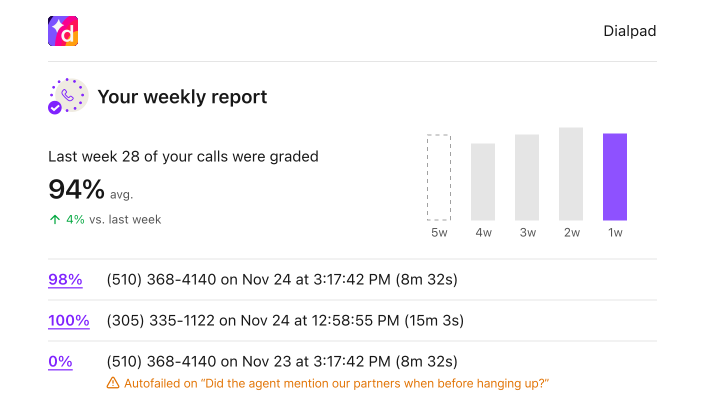
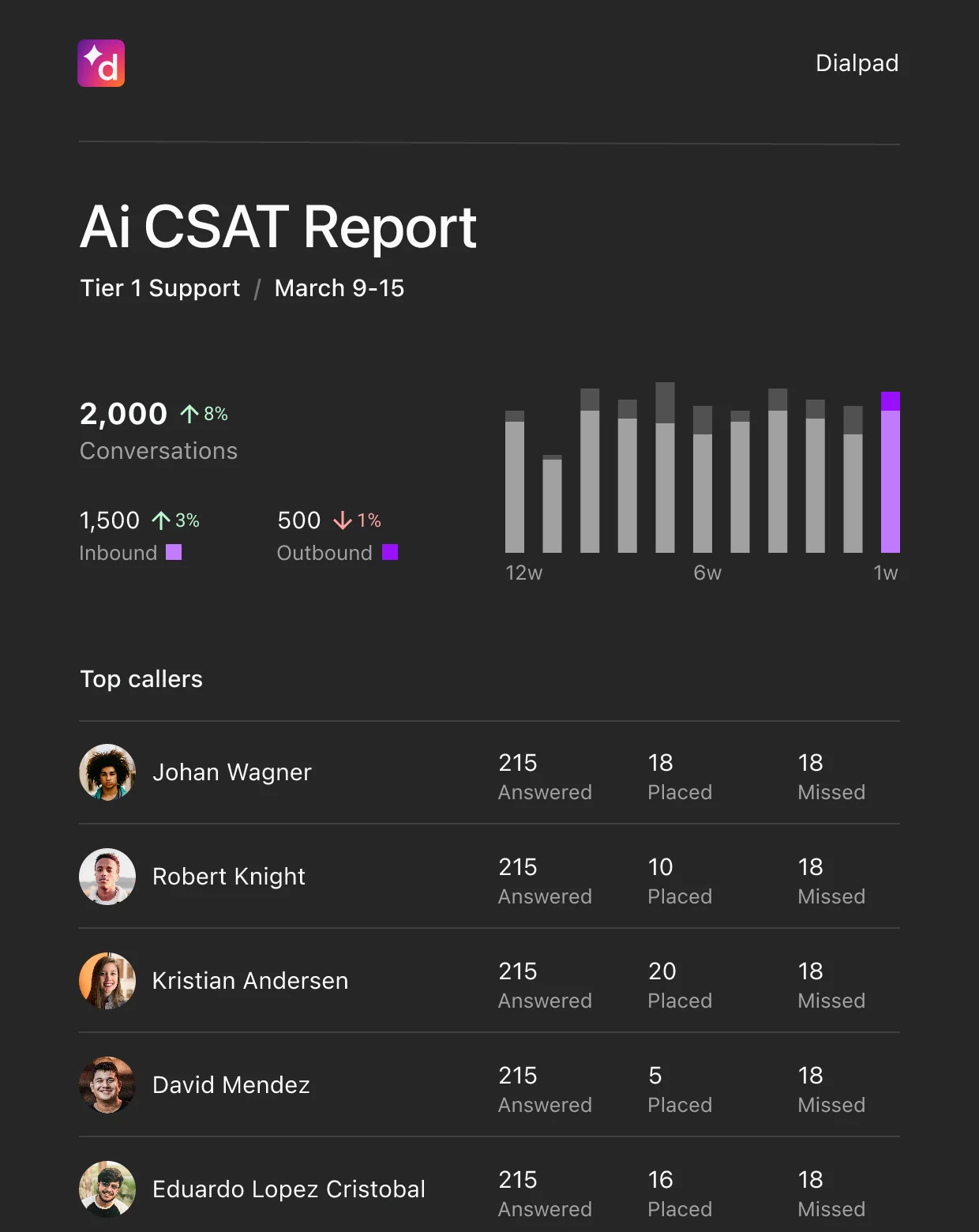
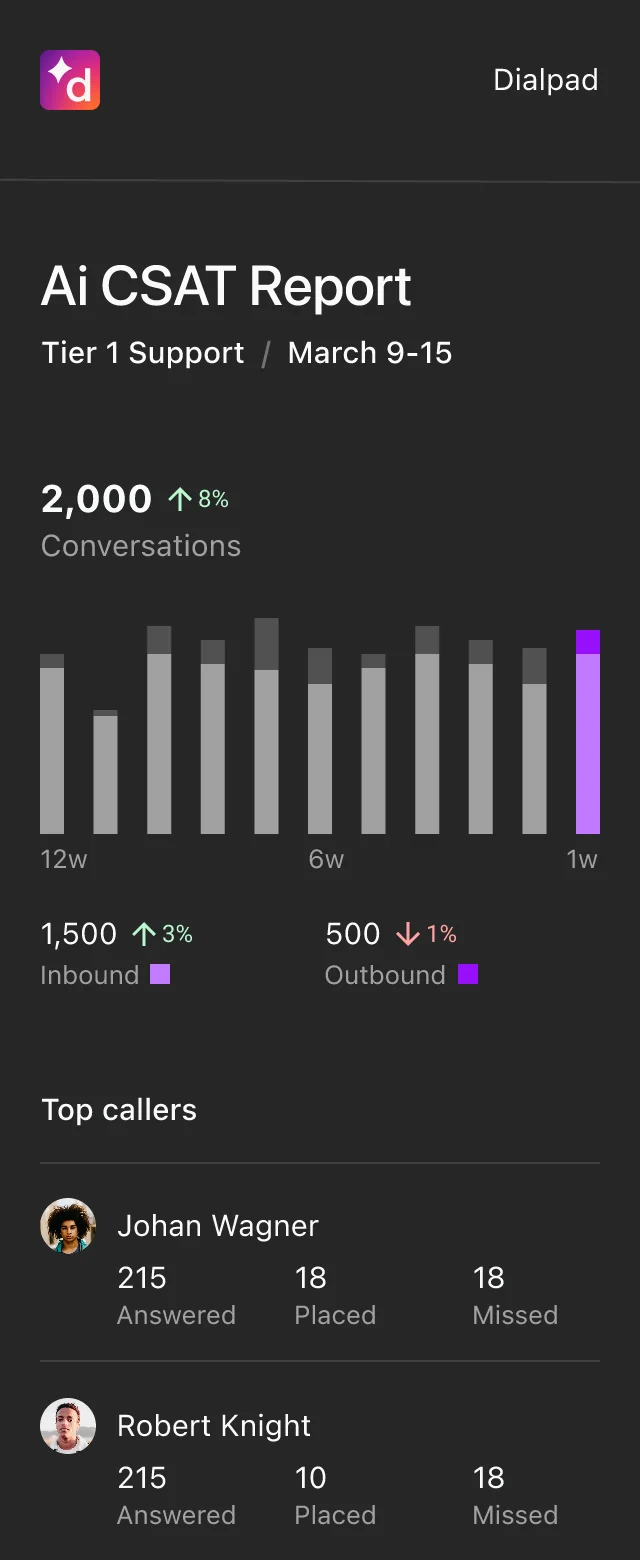
Nobody wants another email to click through, so I built an email that displays live metrics and working bar charts built entirely in HTML and CSS that displays in every major email client. Even Outlook.
Not every design project starts with a request. I redesigned our card system and brought it up to where the rest of the product was heading.
One of my favorite parts of the job is helping people grow. This is a presentation on design strategy for a team offsite, covering things I wish someone had told me earlier. Also published as an article.